Reselling Vintage Sports Pennants: The Definitive Expert Guide to Sourcing, Valuing & Selling

Welcome to the thriving world of vintage sports pennant reselling! These iconic pieces of felt history capture moments in time, celebrate beloved teams, and evoke a powerful sense of nostalgia. From championship triumphs to classic team logos, vintage sports pennants are highly collectible and can fetch impressive prices if you know what to look for and how to sell them. As an expert e-commerce reseller, I'll guide you through the intricacies of this niche, providing you with the knowledge and actionable strategies to turn these nostalgic treasures into profitable sales.
1. Identifying Authentic & Valuable Vintage Sports Pennants
The first step to profitable reselling is understanding what makes a vintage sports pennant genuinely valuable. It's more than just age; it's a combination of historical significance, rarity, and original craftsmanship.
What Defines "Vintage" in Pennants?
Generally, an item is considered vintage if it's 20-100 years old. For sports pennants, the most sought-after pieces typically predate the 1980s, with pre-1960s pennants often commanding premium prices due to scarcity and historical appeal. Even 1980s and 1990s pennants can be valuable, especially if they represent a championship, a specific event, or a popular team.
Authenticity Markers & Construction Clues

Identifying an authentic vintage pennant requires a keen eye for detail:
- Material: Most authentic vintage pennants are made from wool or a rayon-wool felt blend. Older felt tends to be thicker, denser, and sometimes has a slightly coarser texture compared to the thinner, often synthetic-feeling felt of modern reproductions.
- Printing & Graphics:
- Early Appliqué (Pre-1950s/60s): Many very old pennants feature letters and logos that were individually cut from different colored felt pieces and then sewn or glued onto the main pennant body. Look for visible stitching or glue residue.
- Screen Printing (Post-1950s): The most common method. Examine the print quality. Vintage screen prints often have a slightly raised texture and can show minor imperfections, or "cracking" due to age and handling. Reproductions might have overly sharp, perfect, or glossy prints.
- Flocking: Some pennants use flocked (fuzzy) lettering, particularly common in the 1960s-1980s. The flocking should be embedded into the felt, not easily flaking off unless severely damaged.
- Design & Logos: Research the historical logos and mascots of the team for the specific era you suspect the pennant is from. An incorrect logo is a major red flag for a reproduction. Pay attention to fonts and styling.
- Manufacturer Marks: While less common than on other memorabilia, some older pennants (especially collegiate ones) might have small manufacturer stamps or tags, such as Collegiate Pacific, Trenway, or Cooper. These are good indicators of authenticity.
- Size & Shape: Standard pennant sizes were quite consistent historically (e.g., around 12x29 inches or 12x30 inches). Be wary of unusual sizes that don't align with historical norms, though promotional or souvenir items could vary.
Valuable Variations & Rarity Factors
Not all vintage pennants are created equal. Keep an eye out for these highly desirable variations:
- Championship & Event Pennants: World Series, Super Bowl, Stanley Cup, NBA Finals, NCAA Championship, Rose Bowl, Olympics, and All-Star Game pennants are consistently more valuable than standard team pennants, especially from significant historical events.
- Era & Age: Pre-1960s pennants are generally more valuable due to their scarcity. Pre-World War II (pre-1945) pennants are exceptionally rare and highly sought after by serious collectors.
- Defunct Teams or Leagues: Pennants from teams that no longer exist (e.g., Brooklyn Dodgers, Seattle Pilots, specific Negro League teams) or defunct leagues (e.g., old minor leagues, AAFC) carry significant historical value.
- Rare Team/Mascot Designs: Some teams had unique or short-lived mascot designs or specific artistic renditions that are harder to find.
- Specific Players: Pennants commemorating a particular player (e.g., a "Babe Ruth Day" pennant) are rare and valuable.
- Condition (relative to age): While condition is critical, a rare pennant in "fair" condition can still be worth more than a common pennant in "excellent" condition.
2. Checking Condition & Common Flaws
Condition is paramount in determining the value of any collectible, and vintage sports pennants are no exception. A thorough and honest assessment is crucial for accurate pricing and buyer trust.
The Condition Spectrum for Pennants
- Mint (C10): As new, no flaws. Extremely rare for true vintage pennants.
- Excellent (C8-C9): Minor signs of age. Perhaps one or two nearly invisible pinholes, very slight fading on one edge. Graphics crisp.
- Very Good (C6-C7): Noticeable but minor flaws. A few pinholes, light fading, subtle creasing, very small, unobtrusive stain.
- Good (C4-C5): Moderate flaws. Several pinholes, noticeable fading, moderate creasing, small tears (under 1/4 inch), light staining (e.g., water mark).
- Fair (C2-C3): Significant flaws. Many pinholes, heavy fading, large creases/folds, multiple tears or a major tear, moderate to heavy staining, some material loss.
- Poor (C1): Heavily damaged, suitable only if extremely rare or for parts/restoration.
Common Flaws to Meticulously Inspect
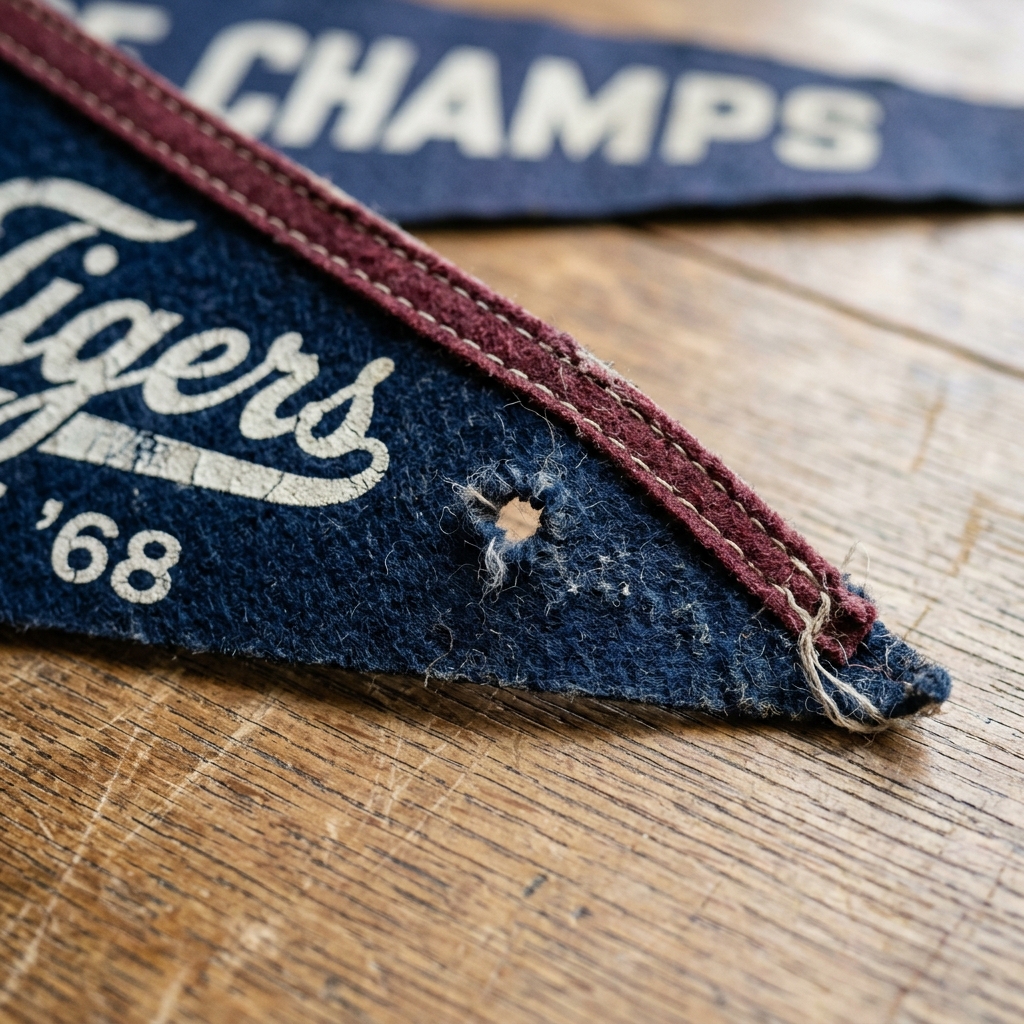
When you're inspecting a vintage sports pennant, look for these common imperfections:
- Pinholes / Tack Holes: Almost every vintage pennant that was ever displayed will have these, usually in the corners or along the top edge. Document the number and location precisely.
- Fading: Sun exposure is the primary culprit. Red and black felt, in particular, are prone to fading. Describe the extent of fading (e.g., "minor fading to red felt," "significant sun fading across top edge").
- Creases / Folds: Improper storage (folding instead of rolling or lying flat) leads to creases. Minor creases might soften over time when laid flat, but deep, sharp creases are often permanent.
- Rips / Tears: Especially common along the pointed tip or edges. Even small tears significantly reduce value. Document size and location.
- Stains: Water stains, dirt, food, or mildew can occur. Describe the color, size, and location of any stains.
- Moth / Pest Damage: Irregular holes, chewed edges, or thinning felt can indicate insect activity. This is a major value detractor.
- Brittle Felt: Over time, felt can dry out and become stiff or brittle, making it prone to cracking or tearing easily.
- Cracked / Peeling Graphics: Especially with screen-printed or flocked designs, the graphics can crack, peel, or flake off due to age and handling.
Describing Condition Accurately for Buyers
Transparency is key to being a trusted reseller.
- High-Resolution Photos: Take clear, well-lit photos of the entire pennant (front and back) and close-ups of every single flaw. Do not hide imperfections.
- Detailed Descriptions: Beyond the overall condition rating, explicitly list all flaws in bullet points or a dedicated "Condition Notes" section. For example: "Numerous pinholes at corners," "Moderate fading to blue felt," "Small 1/4-inch tear on bottom edge," "Crease through the middle."
- Manage Expectations: For older items, phrases like "Good condition for its age" can be helpful, but it must be backed up with specific details. Never use such phrases to obscure flaws.
3. Pricing Strategies: Mastering the Market
Pricing a vintage sports pennant effectively requires research, understanding market dynamics, and a strategic approach. Your goal is to get the maximum value while ensuring a fair and competitive price.
The Power of eBay Sold Comps: Your #1 Research Tool
The most accurate way to determine the current market value of a vintage sports pennant is by analyzing "sold" listings on eBay.
- Search Broadly: Start by searching for your pennant's key identifying features (e.g., "vintage Yankees pennant 1960s," "1971 World Series pennant").
- Filter for "Sold Items": On the left-hand sidebar (or within the filter options on mobile), scroll down and check "Sold Items" and "Completed Items." This is critical – you need to see what actually sold, not just what people are listing for.
- Analyze Comps:
- Direct Comparisons: Find pennants identical or very similar to yours. Pay close attention to the final selling price.
- Condition Comparison: How does the condition of the sold item compare to yours? A mint pennant will sell for significantly more than one in good condition.
- Rarity & Features: Were the sold items from the same era, team, or celebrating the same event?
- Auction vs. Buy It Now (BIN): Note if the item sold via auction (which can indicate strong demand) or BIN (which might represent a more stable market value).
- Identify Trends: Look at multiple sold listings over the past 90 days. Are prices trending up or down? This gives you a clear picture of what buyers are currently willing to pay.
Factors Influencing Pricing
Beyond sold comps, several factors will influence where your pennant falls on the pricing spectrum:
- Rarity: Exceptionally rare pennants (pre-war, defunct teams, unique designs) will command premium prices, even with some flaws.
- Condition: This cannot be stressed enough. For common pennants, condition is king. A perfectly preserved common pennant can outsell a heavily damaged rare one.
- Team Popularity: Pennants from perennial winners and large-market teams (New York Yankees, Los Angeles Dodgers, Boston Celtics, Green Bay Packers, Dallas Cowboys) consistently have higher demand and therefore higher prices.
- Historical Significance: Pennants celebrating specific championships, record-breaking seasons, or historical events will always be more valuable.
- Aesthetic Appeal: A visually striking design or vibrant colors can sometimes lead to a higher price, even if the pennant isn't exceptionally rare.
Auction vs. Buy It Now (BIN) Strategies
- Auction:
- Best For: Highly desirable, rare, or unique vintage sports pennants where you anticipate competitive bidding. It can drive prices higher than you might expect.
- Strategy: Start with a low opening bid (e.g., $9.99 or $19.99) with no reserve. This encourages initial bids. Schedule the auction to end on a Sunday evening, which is peak buying time for many collectors.
- Buy It Now (BIN):
- Best For: More common pennants, items where you have a clear understanding of the market value (from comps), or when you prefer a longer listing duration.
- Strategy: Price competitively based on your sold comps research. Always enable "Best Offer." This allows buyers to negotiate and gives you flexibility to move inventory, even if it's slightly below your initial asking price. Decide your minimum acceptable offer beforehand.
Other Pricing Considerations
- Factor in Fees: Remember to account for platform selling fees (eBay, Etsy), payment processing fees (PayPal, Managed Payments), and the cost of shipping materials when setting your price.
- Leave Room for Offers: If using BIN with Best Offer, price slightly above your absolute minimum to allow for negotiation. Buyers love to feel like they're getting a deal.
- Test the Market: If you have a unique pennant with no direct comps, you might start slightly higher with BIN + Best Offer and observe interest. Adjust if necessary.
4. Best Platforms to Sell & Shipping Tips
Choosing the right platform and mastering shipping ensures your vintage sports pennants reach their new homes safely and you maximize your profit.
Top Platforms for Selling Vintage Sports Pennants
- eBay (Primary Choice):
- Pros: The undisputed king for vintage sports memorabilia. It boasts the largest global audience of dedicated collectors, excellent search functionality for specific items, and robust seller tools. If it's a valuable or rare pennant, eBay is where it belongs.
- Cons: Can be competitive. Seller fees (final value fees + payment processing) can be significant. Requires detailed listings and good customer service.
- Strategy: Utilize specific keywords in your title (e.g., "Vintage 1960s Boston Red Sox Fenway Park Pennant Felt Baseball MLB"). Maximize item specifics. Upload 12 high-quality photos showing every angle and flaw. Offer calculated shipping or factor costs into "free shipping."
- Etsy:
- Pros: Known for vintage and handmade goods, Etsy can attract a slightly different audience looking for unique decor or gifts. Fees are generally lower than eBay.
- Cons: Less traffic from hardcore sports memorabilia collectors compared to eBay. Might not fetch top dollar for highly valuable pieces.
- Strategy: Frame your pennants as "vintage wall decor," "retro sports art," "man cave gift," or "unique home decor." Focus on the aesthetic appeal and styling in your photos and descriptions, appealing to interior decorators as well as collectors.
- Specialized Forums & Facebook Groups:
- Pros: Highly targeted audience of dedicated collectors who are often willing to pay fair prices for specific items. You're dealing directly with enthusiasts, potentially avoiding some platform fees.
- Cons: Smaller reach. Less buyer/seller protection compared to major platforms. Requires building trust within the community.
- Strategy: Join groups like "Vintage Sports Memorabilia Collectors," "Felt Pennant Collectors," or specific team collector groups. Read group rules carefully. Be transparent, offer fair prices, and build a positive reputation. Transactions often happen via PayPal Goods & Services for mutual protection.
- Local Antique Shops / Shows:
- Pros: Cash in hand, no shipping hassle, immediate sale. Good for lower-value or common pennants you want to move quickly without the online effort.
- Cons: Dealers often offer wholesale prices (much lower than retail) as they need to make a profit. Limited audience compared to online.
- Strategy: Best for moving inventory that isn't worth the effort of online listing, or if you prefer face-to-face transactions. Research local demand before approaching shops.
Expert Shipping Tips for Vintage Sports Pennants
Proper packaging is critical to ensure your vintage sports pennant arrives in pristine condition, preventing damage that could lead to returns or negative feedback.
- The Golden Rule: Ship Flat or Rolled – NEVER FOLDED! Folding felt pennants will create permanent creases, severely damaging their value.
- Shipping Flat: Ideal for smaller pennants or those already displaying creases.
- Materials: Use a rigid cardboard mailer (e.g., photo mailer) or sandwich the pennant between two pieces of sturdy, cut-to-size cardboard.
- Protection: Place the pennant inside a clear poly bag or an acid-free plastic sleeve to protect it from moisture, dust, and scuffs.
- Sizing: Ensure the mailer/cardboard is larger than the pennant itself to prevent any bending of the edges during transit.
- Shipping Rolled: Best for larger, uncreased pennants that you want to keep as flat as possible.
- Materials: Use a sturdy cardboard shipping tube (poster tube). A 3-inch or 4-inch diameter tube is ideal, allowing for a loose roll. Avoid tubes with too small a diameter, as tight rolling can still cause damage.
- Process: Place the pennant in a poly bag or acid-free sleeve. Loosely roll the pennant around a smaller cardboard core (like a paper towel roll cut to size, or a piece of PVC pipe) or directly around the inside of the shipping tube. Secure the roll gently with painter's tape or a rubber band around the protective sleeve, not directly on the pennant.
- Padding: Place crumpled packing paper or bubble wrap at both ends of the shipping tube to prevent the pennant from shifting and getting damaged.
- Shipping Flat: Ideal for smaller pennants or those already displaying creases.
- Protective Materials are Your Friends:
- Poly Bags/Sleeves: Essential for moisture and dust protection.
- Rigid Mailers/Cardboard: Crucial for preventing bending on flat shipments.
- Shipping Tubes: Must be sturdy enough to withstand postal handling.
- Bubble Wrap/Packing Paper: For cushioning inside tubes or boxes.
- Weight & Dimensions: Pennants are lightweight. Your shipping cost will primarily be determined by the dimensions of your package (flat mailer size or tube length/diameter). Accurately measure and weigh your packaged item before creating a label.
- Shipping Costs & Insurance:
- Factor in Costs: If offering "free shipping," build the estimated shipping cost into your item's price. If charging separately, use calculated shipping.
- Insurance: For pennants valued at $50 or more, strongly consider purchasing shipping insurance. Most carriers include a small amount of automatic coverage, but ensure it's sufficient for your item's value.
- Tracking: Always use a shipping service with tracking. This protects you as a seller and provides peace of mind for the buyer.
- Clear Labeling: Affix "DO NOT BEND" or "FRAGILE" labels prominently on flat mailers or boxes. While not a guarantee, it can encourage careful handling.
PRO TIP: Make sure you have the right shipping supplies on hand. 📦 Buy Shipping Poly Mailers on Amazon Here
By meticulously following these guidelines, you'll be well on your way to becoming a successful reseller of vintage sports pennants, enjoying the thrill of finding these historical gems and connecting them with passionate collectors worldwide. Happy hunting!