The Ultimate Guide to Reselling Vintage Pokémon Cards: Authenticity, Grading, Pricing & Profit

Welcome to the thrilling world of vintage Pokémon card reselling! What started as a beloved children's game has evolved into a multi-billion dollar secondary market, with rare cards fetching astronomical prices. Whether you're a seasoned collector looking to thin out your stash or a budding entrepreneur eager to capitalize on nostalgia, understanding the nuances of this market is key to unlocking significant profits.
This comprehensive guide will equip you with the expert knowledge needed to navigate the complexities of identifying, evaluating, pricing, and selling vintage Pokémon cards effectively. From spotting fakes to mastering shipping, we'll cover every critical step to transform your Pokémon card finds into a lucrative income stream.
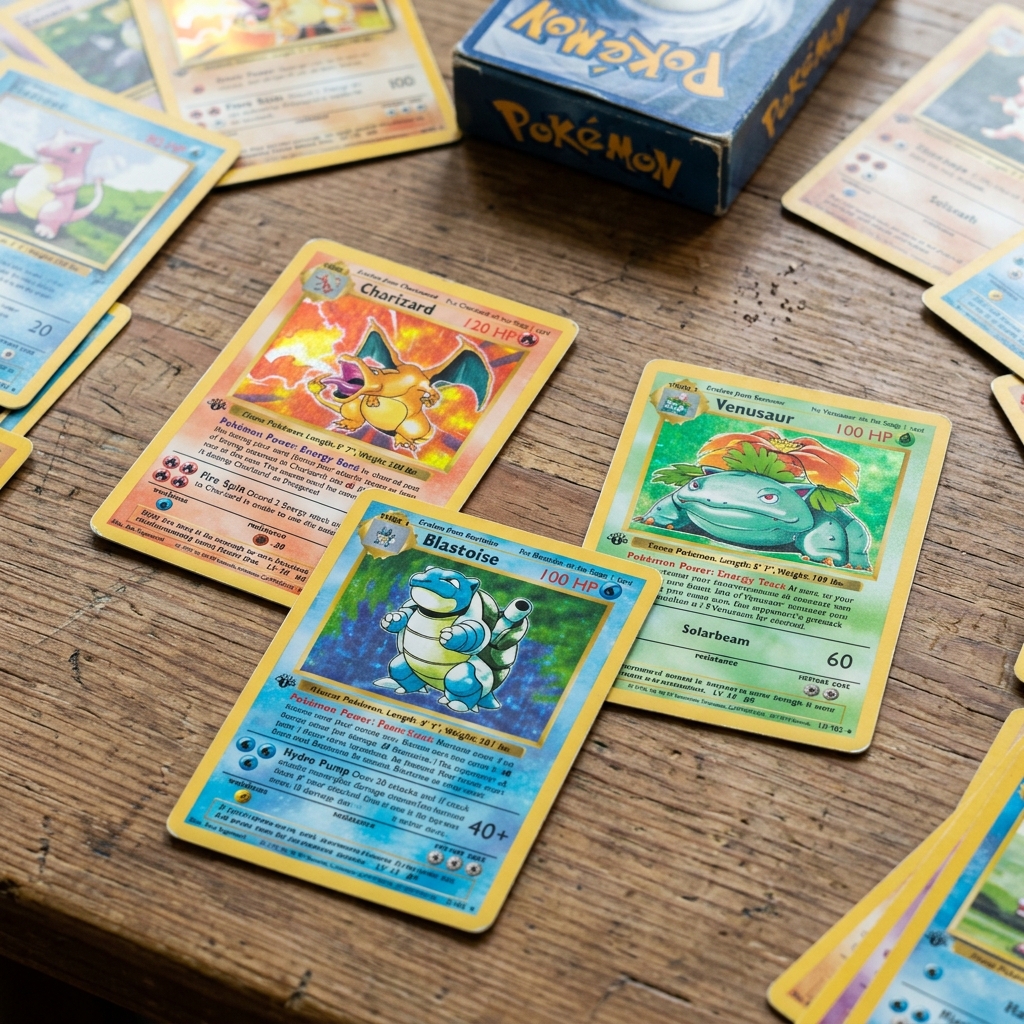
The Hunt for Treasure: Identifying Authentic & Valuable Vintage Pokémon Cards
The first step in reselling is knowing what you have. This involves not only confirming authenticity but also recognizing the subtle variations that can dramatically impact a card's value.
Defining "Vintage" Pokémon Cards
While the definition can vary slightly, "vintage" Pokémon cards typically refer to those released during the initial waves of the Pokémon Trading Card Game (TCG). This primarily encompasses:
- Wizard of the Coast (WotC) Era (1999-2003): This includes iconic sets like Base Set (1st Edition, Shadowless, Unlimited), Jungle, Fossil, Team Rocket, Gym Heroes, Gym Challenge, Neo Genesis, Neo Discovery, Neo Revelation, Neo Destiny, and the e-Series sets (Expedition, Aquapolis, Skyridge). These are generally the most sought-after due to their age, nostalgia, and iconic status.
- Early EX Era (2003-2007): Some consider the early EX series sets (Ruby & Sapphire, Sandstorm, Dragon, etc.) as vintage due to their age and distinct mechanics, though the WotC era generally holds more cachet for "true" vintage.
These early sets feature classic Pokémon artwork, often by beloved artists like Mitsuhiro Arita and Ken Sugimori, and resonate deeply with collectors who grew up with the franchise.
Authenticity Checks – Spotting Fakes
The high value of vintage Pokémon cards unfortunately attracts counterfeiters. Learning to spot fakes is paramount to protecting your investments and your reputation as a seller.
- Card Stock & Feel: Genuine Pokémon cards have a distinct weight, texture, and flexibility. They are made with specific card stock that often has a blue-gray layer in the middle. Fakes often feel too thin, flimsy, overly glossy, or unusually matte. A real card will have a slight give but won't easily bend or crease.
- Print Quality: Authentic cards boast crisp, clear text, vibrant colors, and sharp artwork. Pay close attention to:
- Text: Ensure font consistency, clear punctuation, and no blurry letters or pixelation.
- Images: Artwork should be sharp and detailed, not washed out, grainy, or pixelated. Colors should match known authentic versions.
- Energy Symbols: These intricate symbols should be clearly defined and consistent across all cards of that set. Fakes often have generic, poorly printed, or oddly shaped symbols.
- Holographic Pattern: Genuine holographic cards have a distinct "star-field" or cosmic pattern (Base Set, Jungle, Fossil) or other specific patterns unique to later sets. The holo pattern should shimmer consistently and not look like a cheap sticker.
- Copyright Date & Set Symbol: Every card has a copyright date (e.g., ©1995-1999 Nintendo, Creatures, GAMEFREAK. ©1999 Wizards.) and a set symbol (e.g., Jungle set's leaf, Fossil set's skull). Cross-reference these with online databases like Bulbapedia or Pokelector to ensure they match the card's apparent set and release year.
- Light Test (Advanced): For experienced collectors, a light test can be a strong indicator. When a powerful light (like a phone flashlight) is shone through a genuine card, you might see a faint blue-gray layer from the card stock. Fakes often allow more light to pass through, or show a uniform bright white. Exercise caution and do not bend or damage the card during this test.
Unearthing Valuable Variations & Rarities
Beyond authenticity, specific variations drastically increase a card's market value. Understanding these distinctions is crucial for proper pricing.
- Holographic vs. Non-Holographic: Holographic (holo) cards, featuring a shimmering foil across the Pokémon's artwork, are generally much rarer and more valuable than their non-holo counterparts, especially for popular Pokémon.
- 1st Edition vs. Shadowless vs. Unlimited (Base Set Specific): This is the holy grail of vintage Pokémon collecting:
- 1st Edition: The rarest and most valuable print run, identified by a small "1st Edition" stamp on the left side, below the Pokémon's artwork box.
- Shadowless: The second print run of Base Set. These cards lack the thick shadow on the right border of the artwork box but do not have the 1st Edition stamp. They are significantly rarer than unlimited prints.
- Unlimited: The most common print run, featuring both the shadow on the artwork box and no 1st Edition stamp.
- Error Cards: Misprints or production errors can be incredibly valuable due to their uniqueness and scarcity. Examples include:
- "No Rarity" Base Set Japanese cards (lacking a rarity symbol).
- "Dizzy Punch" Hitmonchan (incorrect attack name).
- "Red Cheeks" Pikachu (Base Set).
- "Ghost Stamp" Ninetales (missing a print detail).
- Always research any oddities you find – they could be worth a fortune!
- Promotional Cards (Promos): Black Star Promos, movie promos, and specific event promos were often released in limited quantities and can be quite valuable. Look for a distinctive black star with the word "PROMO" or unique set symbols.
- Japanese vs. English: While English 1st Edition cards often command the highest prices, certain Japanese vintage cards (especially early "No Rarity" Base Set or unique promos) can be incredibly valuable and are highly sought after by collectors worldwide.
- Illustrator & Artist: Some cards, particularly those illustrated by iconic artists like Mitsuhiro Arita or Atsuko Nishida, garner additional interest and value, especially for their most famous creations (e.g., Arita's Charizard).
The Condition Conundrum: Inspecting & Protecting Your Investment
A card's condition is arguably the single most important factor determining its value after rarity and authenticity. Even a slight flaw can drastically reduce its price.
Understanding Card Condition & Grading Scales
Professional grading services (most notably PSA, BGS, and CGC) assign a numerical grade (typically 1-10) to a card based on its condition, greatly enhancing its value and liquidity. Even for raw (ungraded) cards, understanding the grading scale helps you accurately describe and price your items.
- Mint (M) / Gem Mint (PSA 10): A perfect card, flawless in every respect, with perfect centering. Extremely rare for vintage cards.
- Near Mint (NM) / PSA 7-9: A card that shows minimal to no wear. May have very minor whitening on edges or corners, or a tiny print imperfection.
- Excellent (EX) / Lightly Played (LP): May show minor wear such as slight edge whitening, light scratching on the surface, or minor corner wear.
- Moderately Played (MP): Noticeable wear including moderate whitening, light creases, or more significant surface scratches.
- Heavily Played (HP): Significant wear, multiple creases, heavy scratching, some minor indents.
- Damaged (D) / Poor (PSA 1): Severely damaged, may have tears, heavy creasing, water damage, or significant alterations.
Common Flaws to Meticulously Check For
When evaluating a card, inspect every square millimeter with a critical eye, preferably under good lighting.
- Corners: Look for "whitening" (where the card stock shows through), peeling, or any signs of bending or creasing.
- Edges: Similar to corners, check for whitening, nicks, dings, or scuffing along all four edges.
- Surface: This is where many flaws hide.
- Scratches: Hold the card at an angle under light to reveal hairline scratches on the holographic surface or even the non-foil areas.
- Indentations/Creases: Even faint indents or small creases can severely drop a card's value.
- Print Lines/Defects: Some cards, particularly older ones, may have factory print lines or minor print errors. These are typically less impactful than post-production damage but still noted.
- Holo Bleed: Where the holographic pattern subtly shows through the non-foil areas of the card. Some collectors find this desirable, others consider it a flaw.
- Dirt/Grime/Stains: Any discoloration, smudges, or stains.
- Centering: Examine the borders around the Pokémon's artwork and text. Ideal centering has even borders all around. Off-centering (one border significantly thicker than others) will lower the grade.
- Water Damage: Look for warping, wavy texture, discoloration, or stiffness. Water damage is usually fatal to a card's value.
- Alterations: Be wary of cards that appear to have been tampered with, such as re-inked edges to hide whitening or cards that have been trimmed. These are considered fake/altered and are worthless.
Best Practices for Handling & Storage
Proper handling and storage are crucial to preserving a card's condition and value, especially when preparing for sale.
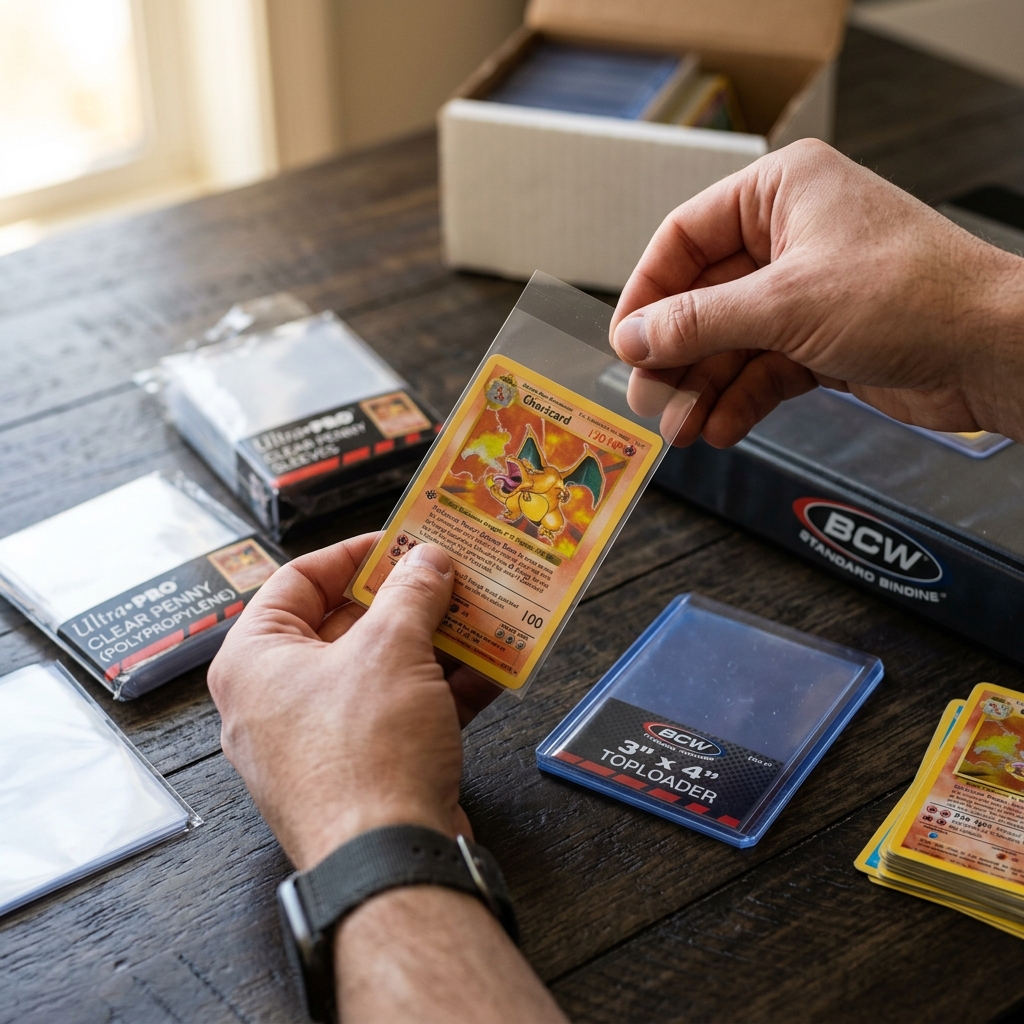
- Sleeves: Immediately place any card you deem valuable into a soft, acid-free penny sleeve to protect its surface from scratches.
- Toploaders/Card Savers: For any card you plan to sell (especially anything over $10), a penny-sleeved card should then be placed into a rigid toploader or a semi-rigid card saver. These prevent bending, creasing, and corner damage. Card savers are often preferred for cards being sent for professional grading.
- Binders: If storing multiple cards in a binder, use a D-ring binder (not O-ring, which can press into cards) with side-loading, acid-free pages. Avoid cheap PVC pages that can damage cards over time.
- Environment: Store cards in a cool, dry place away from direct sunlight, extreme temperatures, and humidity, which can cause warping or fading.
Smart Pricing Strategies: Maximizing Your Vintage Pokémon Card Profits
Pricing is more art than science, but it’s heavily informed by current market data. Overpricing leads to no sales; underpricing leaves money on the table.
The Golden Rule: eBay Sold Comps (Completed Listings)
The most reliable source for pricing vintage Pokémon cards is eBay's "Sold Items" feature. This shows you what buyers have actually paid for a specific card, not just what sellers are asking.
- Search on eBay: Type the exact card name, set, and any relevant details (e.g., "Charizard Base Set 1st Edition Holo PSA 8").
- Filter Results: On the left sidebar (or under "Filters" on mobile), scroll down and select "Sold Items" and "Completed Items."
- Analyze Sales: Look at multiple recent sales (past 30-90 days) for your exact card, in similar condition (raw or graded, with matching grade). Disregard active listings, as they only show asking prices.
- Averaging: Note the range of prices and look for an average. If there's a wide range, try to understand why (e.g., one was poorly listed, another sold during a hype spike).
- Condition is King: Remember, a raw Near Mint card will sell for significantly less than a PSA 9 graded version of the same card. Be realistic about your card's condition.
Beyond eBay: Other Marketplaces & Resources
While eBay is primary, other resources provide valuable pricing data, especially for ungraded cards.
- TCGPlayer.com: An excellent resource for raw (ungraded) card prices, particularly for non-holo rares, uncommons, and commons. It shows current market price, a price history, and recent sales from various vendors. It's less reliable for high-value, graded vintage cards.
- CardLadder.com / PriceCharting.com: These platforms aggregate sales data from various sources (eBay, auction houses) and track historical pricing trends for graded cards. They often require paid subscriptions for full access but offer invaluable insights for serious resellers of high-value items.
- Facebook Groups: Niche Pokémon TCG collecting and selling groups can sometimes offer insights into current market sentiment and direct sales prices, though exercise caution as prices can be less consistent.
Factors Influencing Price
Beyond the basics, several dynamic factors can influence a card's market value:
- Rarity & Scarcity: 1st Edition, Shadowless, rare promos, and error cards naturally command higher prices.
- Condition: Graded cards consistently sell for more than raw cards, with higher grades fetching exponentially more.
- Popularity of Pokémon: Iconic Pokémon like Charizard, Blastoise, Venusaur, Pikachu, and Mewtwo are always in high demand regardless of the set.
- Set Popularity: Base Set, Neo Genesis, and Jungle/Fossil are generally the most popular vintage sets.
- Market Trends & Hype: Influencers (e.g., Logan Paul), anniversaries, new game releases, or media attention can cause temporary spikes in demand and prices. Be aware of these but don't solely rely on them.
- Language: While English and Japanese cards typically lead the market, certain European language cards can have niche collector bases.
Developing Your Listing Price
Once you have your research, it’s time to set your price.
- Conservative Start: If you're unsure or want a quick sale, consider pricing slightly below the average market value. This can attract buyers and generate interest.
- "Best Offer" Option: On platforms like eBay, enabling "Best Offer" allows you to gauge buyer interest and negotiate, often leading to a satisfactory sale even if your initial BIN price is slightly high.
- Auction vs. Buy It Now (BIN):
- Auction: Best for highly sought-after, genuinely rare cards where you anticipate competitive bidding. Start the auction low to attract bids, but ensure your starting price covers your minimum acceptable profit.
- Buy It Now (BIN): Ideal for cards with an established market value, or if you want to avoid the gamble of an auction. Always offer "Best Offer" with BIN.
- Consider Fees: Factor in platform fees (eBay's 12.9% + $0.30 per transaction for most categories), PayPal fees, and shipping costs when calculating your desired profit margin. Don't forget to account for these when setting your list price.
Platforms, Presentation & Packaging: Selling & Shipping Vintage Pokémon Cards
The final stage is presenting your card appealingly and ensuring it reaches its new owner safely.
Top Platforms for Vintage Pokémon Card Sales
Choosing the right platform is crucial for reaching the right buyers and optimizing your selling experience.
- eBay: The undisputed giant for vintage Pokémon cards, especially higher-value and graded items.
- Pros: Largest global audience, robust search functionality, built-in buyer/seller protection.
- Cons: High selling fees, crowded marketplace requires strong listings to stand out.
- Tips: Focus on high-quality photos, detailed descriptions, use relevant keywords in your title, and consider eBay's authentication service for high-value graded cards.
- TCGPlayer.com: Excellent for selling raw, ungraded cards, particularly if you have a larger inventory of commons, uncommons, and non-holo rares from specific sets.
- Pros: Niche TCG audience, generally lower fees for direct sellers (especially for higher volume), simplified listing process for individual cards.
- Cons: Less ideal for ultra-high-value graded cards, higher barrier to entry for new sellers (can require seller levels).
- Facebook Marketplace / Niche Facebook Groups:
- Pros: Potentially lower or no selling fees, direct communication with buyers, ability to target specific collector communities.
- Cons: Less seller protection, higher risk of scams, more effort to manage inquiries, no built-in shipping/payment system (often relies on PayPal Goods & Services).
- Tips: Always vet buyers, insist on PayPal Goods & Services for shipped items, and for local sales, meet in a public, safe location.
- PWCC Marketplace / Heritage Auctions / Goldin Auctions: For truly high-value, professionally graded cards (typically $1,000+).
- Pros: Reaches serious, high-end collectors; professional marketing, photography, and handling.
- Cons: Very high consignment fees, strict acceptance criteria, longer payout times.
Crafting Irresistible Listings
Your listing is your storefront. Make it shine!
- High-Resolution, Clear Photos: This is non-negotiable. Take multiple photos from various angles:
- Front and Back: Well-lit, against a neutral background.
- Close-ups of Flaws: Be honest and show any whitening, scratches, or imperfections. Transparency builds trust.
- Holographic Effect: Try to capture the shimmer if it's a holo card.
- Graded Cards: Show the slab clearly, including the grade, certification number, and any sub-grades.
- Detailed & Honest Descriptions: Provide all necessary information:
- Card Name, Set, Card Number.
- Edition: 1st Edition, Shadowless, Unlimited, etc.
- Condition: Accurately describe the condition (e.g., "Near Mint, minor edge whitening on top left corner," or "Professionally graded PSA 9 Mint").
- Authenticity: Reassure buyers it's a genuine card.
- Keywords: Use relevant terms buyers will search for (e.g., "vintage," "holo," "rare," "Pokémon TCG," specific Pokémon names).
- Transparency is Key: Disclose all flaws, no matter how minor. This prevents disputes, returns, and negative feedback. Buyers appreciate honesty.
Secure Shipping & Handling – Protecting Your Sale
A successful sale isn't complete until the card safely arrives. Proper packaging is paramount to avoiding damage in transit.
- Card Sleeves & Toploaders: Every single card should be placed in a soft penny sleeve, then securely within a rigid toploader (or card saver for very thin cards).
- Team Bags / Painter's Tape: Place the sleeved-and-toploaded card into a "Team Bag" (a resealable plastic bag) to prevent it from sliding out of the toploader. Alternatively, you can use a small piece of painter's tape (less adhesive) over the top of the toploader, ensuring it doesn't touch the card itself.
- Rigid Protection: Sandwich the toploaded card between two pieces of rigid cardboard (cut from a cereal box or similar) slightly larger than the card. Secure with painter's tape or a rubber band around the cardboard (not the card).
- Mailer Type:
- Rigid Mailer: For 1-2 raw cards, this provides excellent flat protection.
- Bubble Mailer: For multiple cards, graded cards, or higher-value raw cards. Always reinforce with internal cardboard.
- Tracking: Always use tracking for any item over $10-20. This protects both you and the buyer from "item not received" claims.
- Insurance: Essential for high-value cards (generally anything over $50-$100). USPS Priority Mail often includes some insurance, but consider purchasing additional coverage for expensive items.
- Signature Confirmation: For very high-value items (e.g., $250+ on eBay), require a signature upon delivery. This adds an extra layer of security.
- Customs Forms (International): Fill out customs declarations accurately, declaring the correct value for insurance purposes. Misrepresenting value is illegal and can void your insurance.
- "DO NOT BEND" Stickers: While not foolproof, adding a clear "DO NOT BEND" sticker can provide a visual reminder to postal workers to handle with care.
PRO TIP: Make sure you have the right shipping supplies on hand. 📦 Buy Shipping Poly Mailers on Amazon Here
Reselling vintage Pokémon cards can be an incredibly rewarding venture. By mastering authenticity checks, understanding condition, leveraging smart pricing strategies, and ensuring impeccable presentation and shipping, you'll be well on your way to building a reputable and profitable e-commerce business in the thriving world of Pokémon TCG. Happy hunting and good luck with your sales!