The Ultimate Reseller's Guide to Vintage Boomboxes: Identify, Restore, and Profit Big

The distinctive rumble of bass, the flashing lights of an equalizer, and the sheer presence of a vintage boombox transport many back to a golden era of portable music. More than just a piece of nostalgia, these powerful sound machines have become highly sought-after collector's items and a fantastic category for e-commerce resellers. From audiophiles to fashionistas looking for a statement piece, the market for vintage boomboxes is robust and offers significant profit potential.
As an expert e-commerce reseller and SEO copywriter, I've seen firsthand how carefully sourced and well-presented vintage electronics can command premium prices. This comprehensive guide will arm you with the knowledge to navigate the exciting world of vintage boombox reselling, ensuring you identify treasures, accurately assess their value, and get them into the hands of eager buyers safely.
Identifying Authentic Vintage Boomboxes and Valuable Variations
The first step to profitable reselling is knowing what you're looking at. Not all old portable stereos are created equal. You need to distinguish between a common thrift store find and a true "grail" item.Iconic Brands and Models to Target
Certain brands and models consistently fetch higher prices due to their reputation for quality, distinctive design, or historical significance. Keep an eye out for: * **JVC:** Particularly the RC-M90 and PC-100. The RC-M90 is often considered the "king of boomboxes" for its powerful sound and robust build. * **Sharp:** Models like the GF-777, GF-9090, and GF-999 are highly desirable for their triple tape decks, impressive size, and rich sound. * **Panasonic:** The RX-5000 and RX-C60 are fantastic finds, known for their solid performance and often unique features like graphic equalizers. * **Sony:** Look for the CFS-W600 and the high-end Walkman-style boomboxes. * **Sanyo:** The M9800 and M9990 were popular and well-built. * **Pioneer:** Often produced high-quality, sleek designs. * **AIWA:** Known for innovation and sound quality in its heyday. * **Toshiba:** The RT-SX3 and RT-S90 are classic examples.These "grail" models often share characteristics like large speakers, multiple cassette decks, complex graphic equalizers, and heavy-duty construction. The larger and more feature-rich, the better, generally.
Key Features to Look For
Beyond brand and model, specific features elevate a boombox's desirability and value: * **Dual Cassette Decks:** Allows for dubbing and extended playback, a highly sought-after feature. * **Graphic Equalizers (EQs):** Not just for sound customization, the visual display of an EQ is a huge aesthetic draw for collectors. * **Removable Speakers:** Found on larger, higher-end units, offering flexibility in sound staging. * **Shortwave/Multi-Band Radio:** Adds to the unit's versatility and collector appeal, showing a broader range of engineering. * **CD Player Integration:** While technically making them less "vintage" (late 80s/early 90s), a well-integrated CD player on a classic boombox chassis can still be valuable. * **Line-In/Phono Inputs:** Crucial for modern connectivity, allowing users to hook up smartphones or other audio sources. This significantly boosts usability and appeal. * **Robust Build Quality:** Metal grilles, sturdy carrying handles, and overall heavy construction usually indicate a higher-quality unit designed to last.Spotting Fakes or Less Desirable Units
The vintage boombox market isn't entirely immune to fakes or, more commonly, modern interpretations that aren't truly vintage. Be wary of: * **Generic Branding:** Units with no discernible brand name or obscure, cheaply made brands are usually not worth your time. * **Poor Build Quality:** Lightweight plastic, flimsy buttons, and cheap speaker covers are indicators of lower-tier products. * **Missing Features:** A boombox lacking basic radio functions, proper tape decks, or decent speakers is likely a budget model. * **Bluetooth-Only "Boombox-Style" Speakers:** These are modern devices designed to look like vintage boomboxes but lack any actual vintage components (cassette decks, multi-band radio, etc.). While they have a market, they are not *vintage boomboxes* for the purpose of this guide. * **Look for Serial Numbers and Original Labels:** These provide authenticity and can help verify the model and year of manufacture.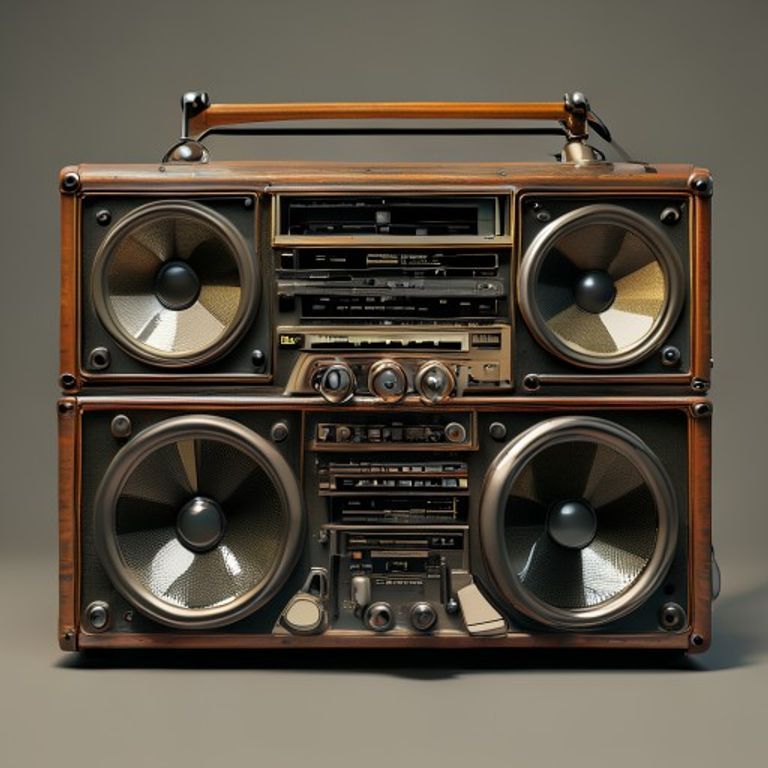
Thorough Condition Checks: Common Flaws and Restoration Potential
Condition is king in the vintage electronics market. A pristine, fully functional boombox can fetch exponentially more than a cosmetically challenged or partially working unit.Cosmetic Condition
Perform a meticulous visual inspection from all angles: * **Scratches, Dings, Cracks:** Assess the severity. Minor scuffs are often acceptable, but deep scratches, major dents, or cracks in the casing or speaker grilles significantly reduce value. * **Antenna:** Is it present? Does it extend fully without bending or sticking? Missing or broken antennas are very common and often need replacing. * **Battery Compartment:** This is CRITICAL. Open it and check for any signs of battery corrosion (green, white, or crusty residue). Even minor corrosion can indicate damage to the battery terminals or deeper circuitry. Cleanable corrosion is one thing, but heavily damaged terminals can be a dealbreaker for many buyers, or require significant repair. * **Grilles:** Are the speaker grilles dented, rusted, or missing pieces? These are often hard to replace and detract heavily from appearance. * **Knobs and Buttons:** Are all original knobs and buttons present and accounted for? Do they turn smoothly or click firmly? Missing or broken controls impact both aesthetics and functionality. * **Handle:** The carrying handle should be secure, free of cracks, and fully functional. A broken handle can render a "portable" unit less desirable. * **Dust and Dirt:** While most units will have some dust, excessive grime can indicate poor storage conditions or neglect.Functional Assessment
This is where the real value often lies. Test every single function: * **Power:** Test with both AC adapter (if available) and batteries. Ensure it powers on consistently. If only one works, note it. * **Radio:** Tune into all available bands (AM, FM, Shortwave, Weather, etc.). Listen for clear reception, proper tuning, and no static unless due to poor signal. * **Cassette Deck(s):** * **Play:** Insert a known good cassette tape. Does it play at the correct speed? Listen for warbling, which often indicates stretched or failing drive belts. * **Fast Forward/Rewind:** Do both functions work efficiently? * **Record (if applicable):** If it has a record function, test it with a blank tape. * **Eject/Door Mechanism:** Does the cassette door open and close smoothly? * Cassette deck belts are notorious for degrading over time. Assume they might need replacement unless explicitly stated otherwise by a previous owner. * **CD Player (if present):** Insert a standard audio CD. Does it read the disc quickly and play without skipping or error messages? * **Aux/Line In:** If it has an auxiliary input, connect an audio source (like your phone) to test if sound plays clearly through the boombox speakers. * **Speakers:** Listen carefully for clear, crisp sound. Any buzzing, crackling, distortion, or lack of sound from one speaker indicates an issue (blown speaker, wiring, amplifier problem). * **Lights/Meters:** Do all indicator lights, VU meters, and display screens (if applicable) function correctly? * **Headphone Jack:** Test the headphone output if present.Restoration Potential
Many vintage boomboxes can be brought back to glory with some effort: * **Cosmetic TLC:** Minor scuffs can often be buffed out. A thorough cleaning with appropriate electronics cleaner can work wonders. * **Battery Compartment Cleaning:** Light corrosion can often be carefully cleaned with a cotton swab and vinegar or baking soda paste, followed by a light application of 📦 **[DeoxIT D5 Contact Cleaner Spray on Amazon](https://www.amazon.com/DeoxIT-D5S-6-Spray-Contact-Cleaner/dp/B0002BBV4G?tag=thriftbrain-20)**. However, extensive corrosion might require more advanced repair. * **Belt Replacement:** Cassette deck belts are a common repair. Kits are readily available online, and there are many YouTube tutorials. If you're handy, this significantly increases value. * **Contact Cleaner for Knobs/Switches:** Crackly volume knobs or sticky switches can often be remedied by a shot of contact cleaner like DeoxIT D5. * **"For Parts/Repair" Sales:** If a boombox has significant issues beyond your repair capabilities, consider selling it "for parts or repair." Even non-working units can fetch decent money if they are rare models, as collectors will pay for specific components or to restore them themselves. Be *extremely* transparent about its condition.Strategic Pricing for Maximum Profit
Pricing a vintage boombox requires research and an understanding of the market. Don't guess; investigate!Leveraging eBay Sold Comps
This is your most powerful tool. 1. Go to eBay.com and search for your specific boombox model (e.g., "JVC RC-M90"). 2. On the left-hand sidebar, scroll down and check the boxes for "Sold Items" and "Completed Items." 3. Analyze the results: * **Look for identical or very similar models.** * **Pay close attention to condition.** A "working, excellent condition" unit will have sold for significantly more than a "for parts" unit. * **Note what was included:** Original box, manual, power cord, accessories? These add value. * **Factor in shipping:** Did the seller offer free shipping? If so, the final price effectively includes shipping, which you'll need to account for in your own pricing. 4. Gather at least 3-5 comparable sales to get a solid average.Current Market Value & Rarity
* **"Grail" boomboxes:** As discussed, iconic models like the JVC RC-M90 or Sharp GF-777 will naturally command higher prices. These are investment pieces for collectors. * **Rarity:** Some less common brands or unique feature sets can also drive up demand. If you can't find many sold comps for a specific model, it might indicate rarity. * **Nostalgia and Trends:** The vintage electronics market is influenced by nostalgia. Periods where specific decades (like the 80s) are trending can increase demand and prices.Condition-Based Pricing Adjustments
* **Pristine, Fully Functional with All Original Accessories:** Price at the very top of your researched range. This is the ideal scenario. * **Excellent Cosmetic, Fully Functional, Missing Minor Accessories:** Slight discount from top dollar, but still strong. * **Good Cosmetic, Fully Functional, Some Wear/Minor Flaws:** Moderate discount. Be transparent about flaws in your listing. * **Fair Cosmetic, Partially Functional (e.g., radio works, tape deck doesn't):** Significant discount. Clearly list all working and non-working components. * **"For Parts/Repair":** Price for core components or restoration potential. These still sell, especially for rare models, but at the lowest tier."Best Offer" Strategy
On platforms like eBay, allowing "Best Offer" can be beneficial. It engages buyers and can lead to a quicker sale, especially if you set a reasonable minimum acceptance price that still ensures profit. It also allows you to gauge true buyer interest.Best Platforms for Selling & Shipping Vintage Boomboxes
Choosing the right platform and knowing how to ship these often bulky and fragile items is crucial for success and customer satisfaction.Where to Sell
* **eBay:** * **Pros:** The undisputed king for vintage electronics, offering the widest national and international reach. Best for high-value items, obscure models, and "for parts" sales. Allows for detailed listings, multiple photos, and various selling formats (auction, Buy It Now). * **Cons:** Higher fees (eBay + PayPal/Managed Payments), requires careful shipping due to potential for damage claims. * **Strategy:** Use Buy It Now with "Best Offer" for most items, or an auction for very rare/desirable items to drive up bidding.-
Local Marketplaces (Facebook Marketplace, Craigslist):
- Pros: Ideal for very large or heavy boomboxes where shipping costs would be prohibitive. No selling fees. Allows for in-person pickup, eliminating shipping risks.
- Cons: Limited audience to your local area. Less formal, more prone to no-shows or low-ball offers. Payment typically cash only.
- Strategy: Best for items you want to move quickly without the hassle of packing/shipping, or for testing the local market before going national. Always meet in a safe, public location.
-
Poshmark:
- Pros: Very simple listing process, flat-rate shipping for items under 5 lbs.
- Cons: Not ideal for large or heavy electronics. Poshmark's shipping label is often too small for boomboxes, and their audience is primarily fashion-focused. Heavier items incur significant overage fees.
- Strategy: Generally avoid for full-sized boomboxes. Might work for very small, portable "boombox-style" radios under 5 lbs if you have a niche buyer.
-
Specialty Forums/Groups:
- Pros: Dedicated audiophile and vintage electronics forums or Facebook groups can connect you directly with knowledgeable buyers looking for specific models. Often results in fair prices and fewer hassles.
- Cons: Smaller audience, might require building trust within the community.
- Strategy: A good option for highly rare or expensive units where you want to avoid eBay fees and connect with serious collectors.
 `
`
Expert Shipping Tips for Fragile Electronics
Shipping a vintage boombox is not like shipping a t-shirt. These are heavy, often bulky, and contain delicate components. Proper packing is paramount to prevent damage and ensure positive feedback.- Double Boxing is Key: This is non-negotiable for valuable or fragile electronics.
- Inner Box: Wrap the boombox thoroughly in multiple layers of large bubble wrap. Secure with packing tape. Place this bubble-wrapped unit into a snug-fitting sturdy cardboard box.
- Cushioning: Surround the inner box on all sides with at least 2-3 inches of cushioning material (packing peanuts, crumpled kraft paper, dense foam inserts).
- Outer Box: Place the cushioned inner box into a larger, equally sturdy outer box. Ensure no part of the inner box is touching the outer box directly.
- Plenty of Padding: Use ample bubble wrap (large bubbles, not small ones) to protect all surfaces, especially corners, speakers, and delicate knobs/antennas. Fill all voids in both boxes to prevent movement during transit.
- Antenna Protection: Extend the antenna fully, then carefully wrap it with bubble wrap or foam, taping it gently to the unit. If detachable, remove it and pack it separately.
- Battery Compartment: ALWAYS REMOVE ALL BATTERIES before shipping. State this clearly in your listing. Battery leaks during transit are a nightmare.
- Power Cord: If included, wrap the power cord separately and secure it within the box so it doesn't rattle around and scratch the unit.
- Labeling: Affix "FRAGILE" stickers prominently on multiple sides of the outer box. Adding "THIS SIDE UP" arrows can also be helpful, though not guaranteed to be honored.
- Shipping Carriers & Insurance:
- Compare Rates: Use online calculators from USPS, FedEx, and UPS. For heavier, larger items, FedEx and UPS often offer better rates.
- Calculated Shipping: Always use calculated shipping on eBay. Enter accurate weight and dimensions (after packing!) to avoid undercharging for shipping.
- Insurance: ALWAYS insure valuable items for their full sold value. The small cost is worth the peace of mind in case of loss or damage. Signature confirmation is also recommended for higher-value sales.
Reselling vintage boomboxes can be a truly rewarding endeavor, blending the thrill of the hunt with the satisfaction of bringing a piece of audio history back to life. By meticulously following these guidelines for identification, condition assessment, pricing, and shipping, you'll be well on your way to building a profitable and reputable vintage electronics reselling business. Happy hunting!