Nostalgia in a Box: How to Source and Flip Vintage Board Games

The board game aisle at a thrift store is usually a chaotic mess of ripped boxes, missing pieces, and fifty copies of Trivial Pursuit. Most clothing and electronics resellers walk right past it. But for those willing to do a little counting and organizing, vintage board games represent one of the most reliable and high-margin niches in the reselling game.
Nostalgia is a powerful drug. People who grew up in the 80s and 90s are now in their 30s and 40s with disposable income, and they are willing to pay top dollar to share their childhood favorites with their own kids, or simply to recapture that feeling for a game night.
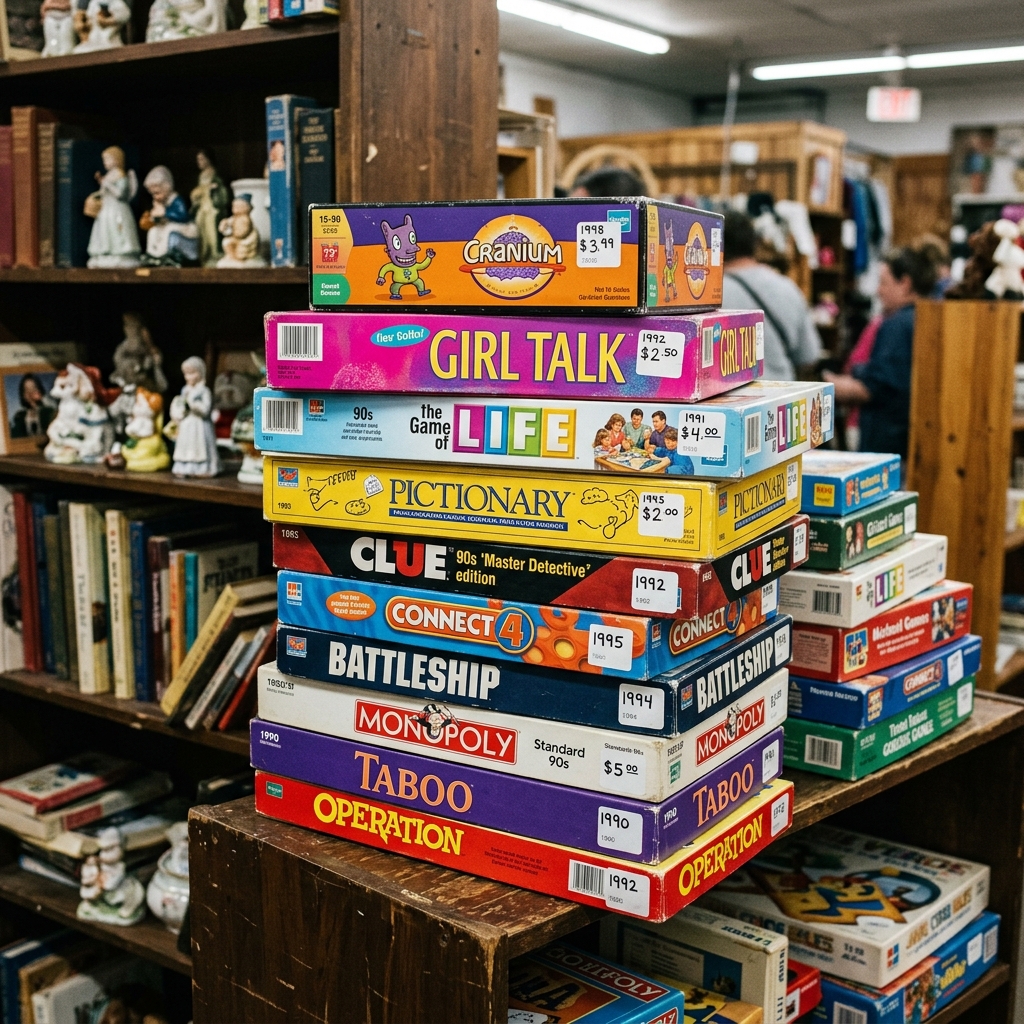
The "Always Buy" List (The Grails)
While you should always check eBay sold comps, if you see any of these titles sitting on a thrift store shelf, put them in your cart immediately:
- Fireball Island (1986): The undisputed king of vintage board game flips. Known for its massive 3D plastic island board and rolling marbles. Even incomplete copies sell for $100+. A complete, excellent condition copy can fetch $300 - $500.
- Dark Tower (1981): Features an electronic, rotating tower in the center. Extremely rare to find working. Sells for $250 - $400.
- HeroQuest (1989): A gateway to Dungeons & Dragons. The value is in the plastic miniatures and furniture. Complete copies easily break $150.
- Omega Virus (1992): An electronic, talking sci-fi game. Very popular and sells for $100+.
- Mall Madness (Early 90s Versions): Specifically the version with the electronic credit card scanner. A massive hit with nostalgic millennial women. Sells for $60 - $100.
- 13 Dead End Drive (1993): A 3D board game with traps. Sells for $40 - $60.
- Crossbows and Catapults (1983): A physical action game. The rubber bands are usually dry-rotted, but the plastic pieces hold immense value. $60 - $100.
The "Part Out" Strategy (Selling Incomplete Games)
What happens if you find a copy of Fireball Island, but it's missing the Vul-Kar idol and two marbles? Buy it anyway.
Selling board game parts is often more profitable than selling the complete game.
Think about it: There are thousands of people who already own Fireball Island, but they lost a few pieces over the last 30 years. They don't want to buy a whole new $300 game; they just want to buy the specific red marble or the bridge piece they are missing.
If you find an incomplete Grail game, separate the pieces:
- Sell the board itself.
- Sell a bundle of the cards.
- Sell the plastic miniatures individually or in small lots.
- Sell the original instruction manual.
You can often double your total profit by parting out a high-demand game, and parts are significantly easier and cheaper to ship!
Verifying Completeness in the Store
If a game isn't a "grail" but still sells for a decent amount (e.g., $40-$50), you need to verify it's complete before buying it. Selling an incomplete game as "Complete" will result in an immediate return.
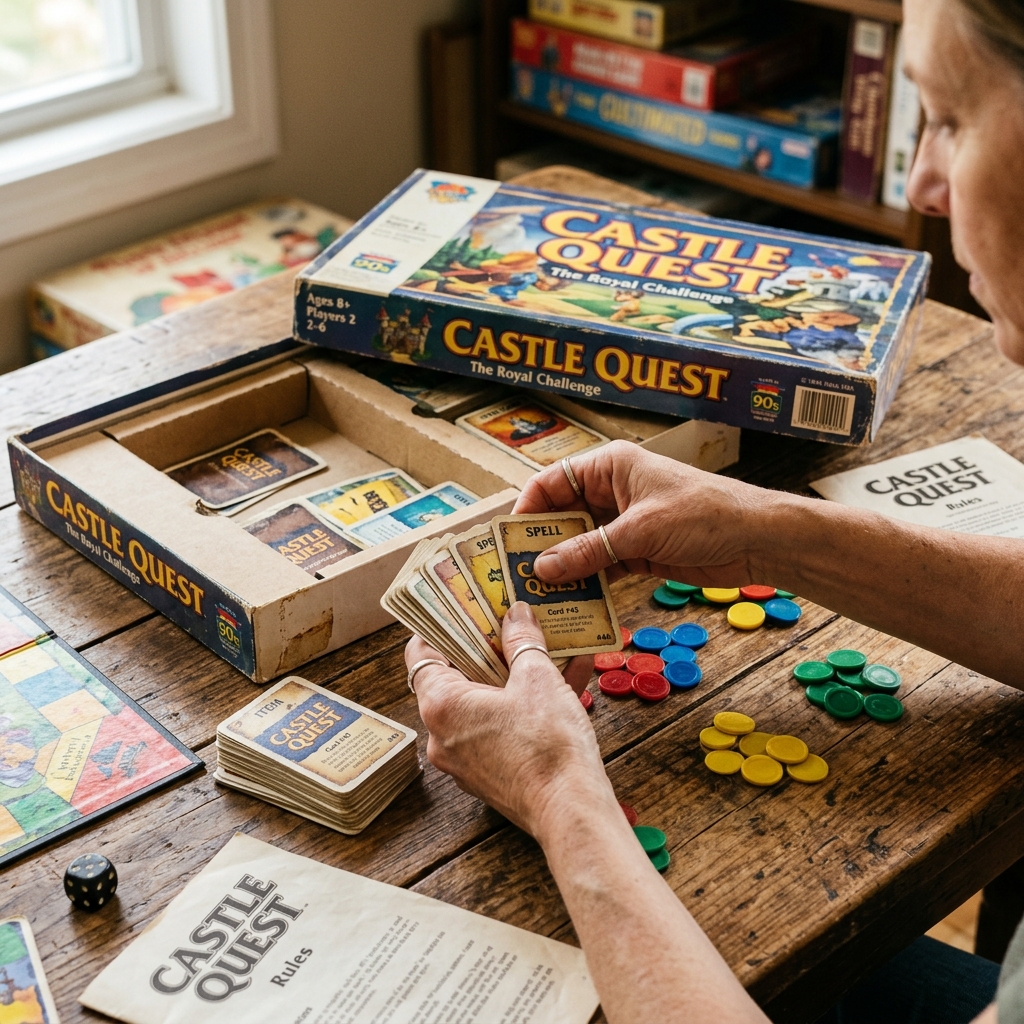
- Find the Parts List: Open the box and find the instruction manual. There is almost always a "Components" list on the first or second page.
- Count: It takes 3 minutes to count the cards, tokens, and pieces. Do it in the aisle. If the thrift store taped the box shut, politely ask a manager if you can open it to verify the contents before purchasing.
- Check the Board: Unfold the board completely to ensure it isn't split down the middle or heavily stained.
Preparing and Packaging for Sale
Presentation is everything when selling a $100 vintage toy.
1. Organization
Do not just dump the pieces back into the box. Buy a bulk pack of small, clear resealable baggies. Put the dice in one bag, the cards in another, and the player tokens in another. When the buyer opens the box, it should look professionally curated. 📦 Buy Small Clear Resealable Baggies (2x3 inch) on Amazon
2. Securing the Box
Vintage game boxes have weak corners. If you ship it as-is, the heavy cardboard board inside will slide around and blow out the corners of the box during transit. The Secret: Use a heat shrink wrap bag or cling wrap to tightly secure the game box before you put it in the shipping box. This holds the lid tightly to the base and prevents internal movement. 📦 Buy Heat Shrink Wrap Bags for Board Games on Amazon
3. Shipping
Board games require large, flat boxes. Do not try to stuff a rectangular game into a square box.
- Wrap the shrink-wrapped game in a layer of bubble wrap.
- Place it in a sturdy corrugated box. Ensure there is at least an inch of void fill (peanuts or paper) on all sides to protect the corners from crushing. 📦 Buy Heavy Duty Packing Tape on Amazon
By taking the time to verify completeness, organizing the components, and shipping securely, you can turn the chaotic thrift store toy aisle into a highly predictable revenue stream.